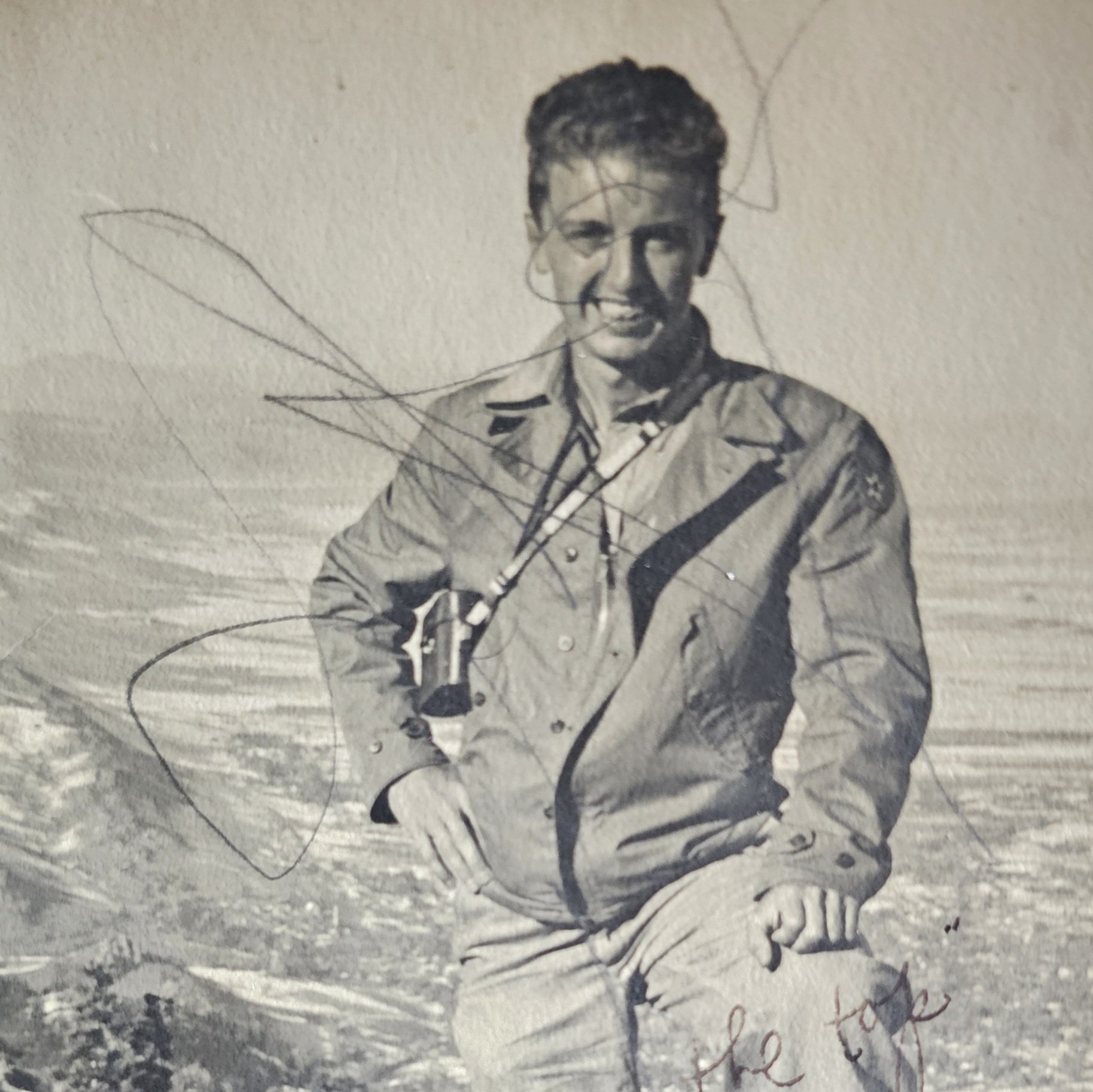
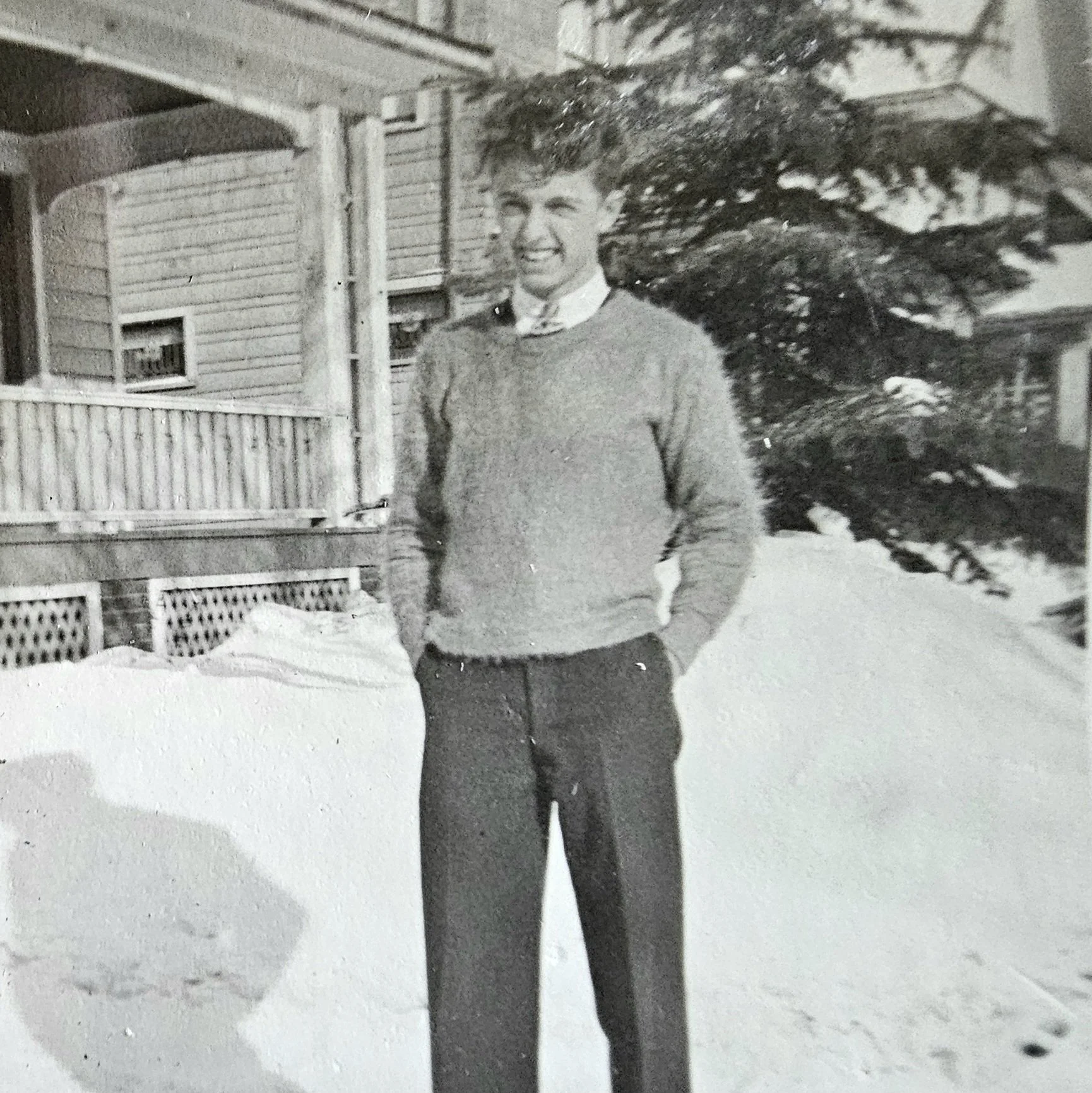
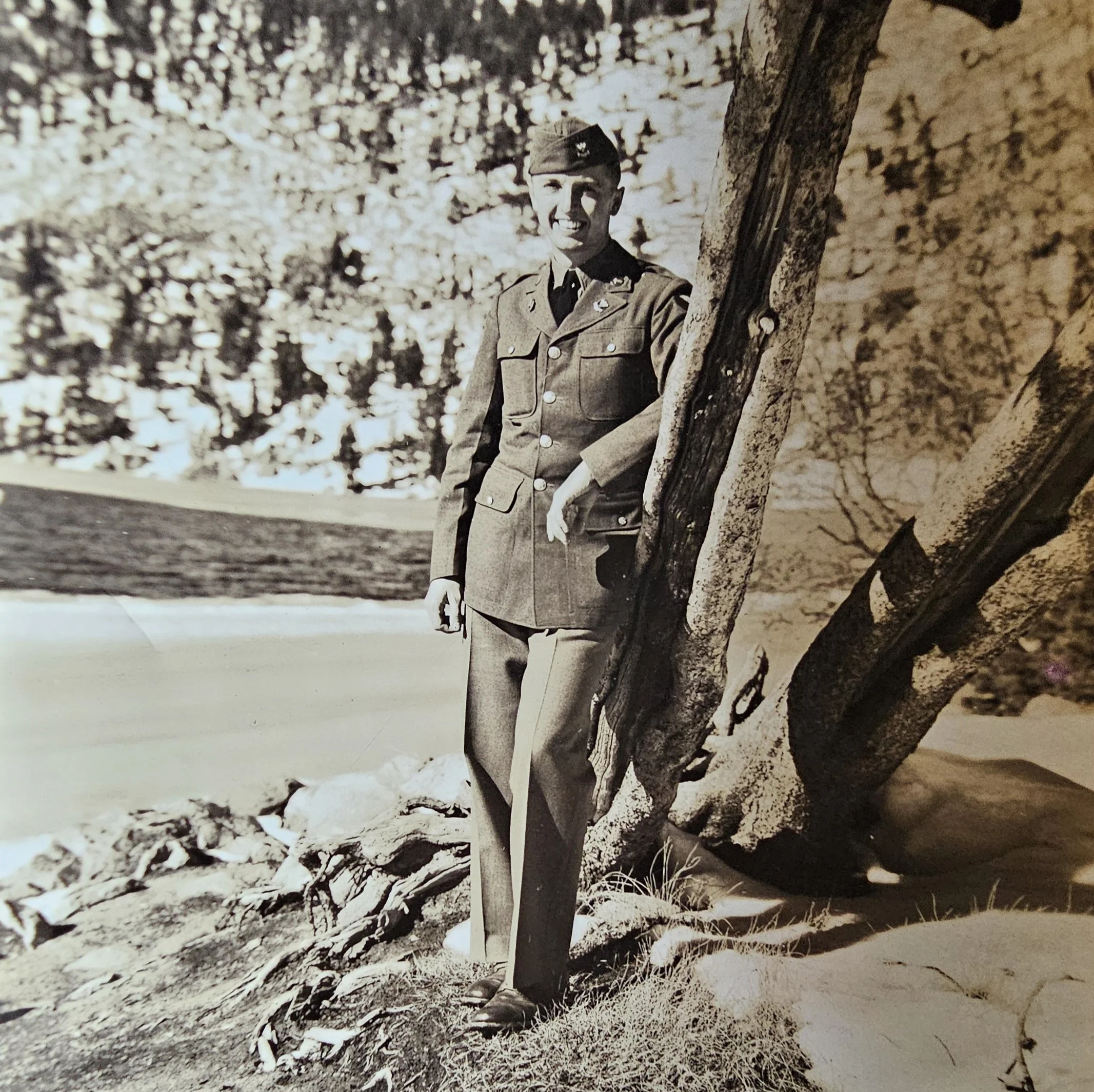
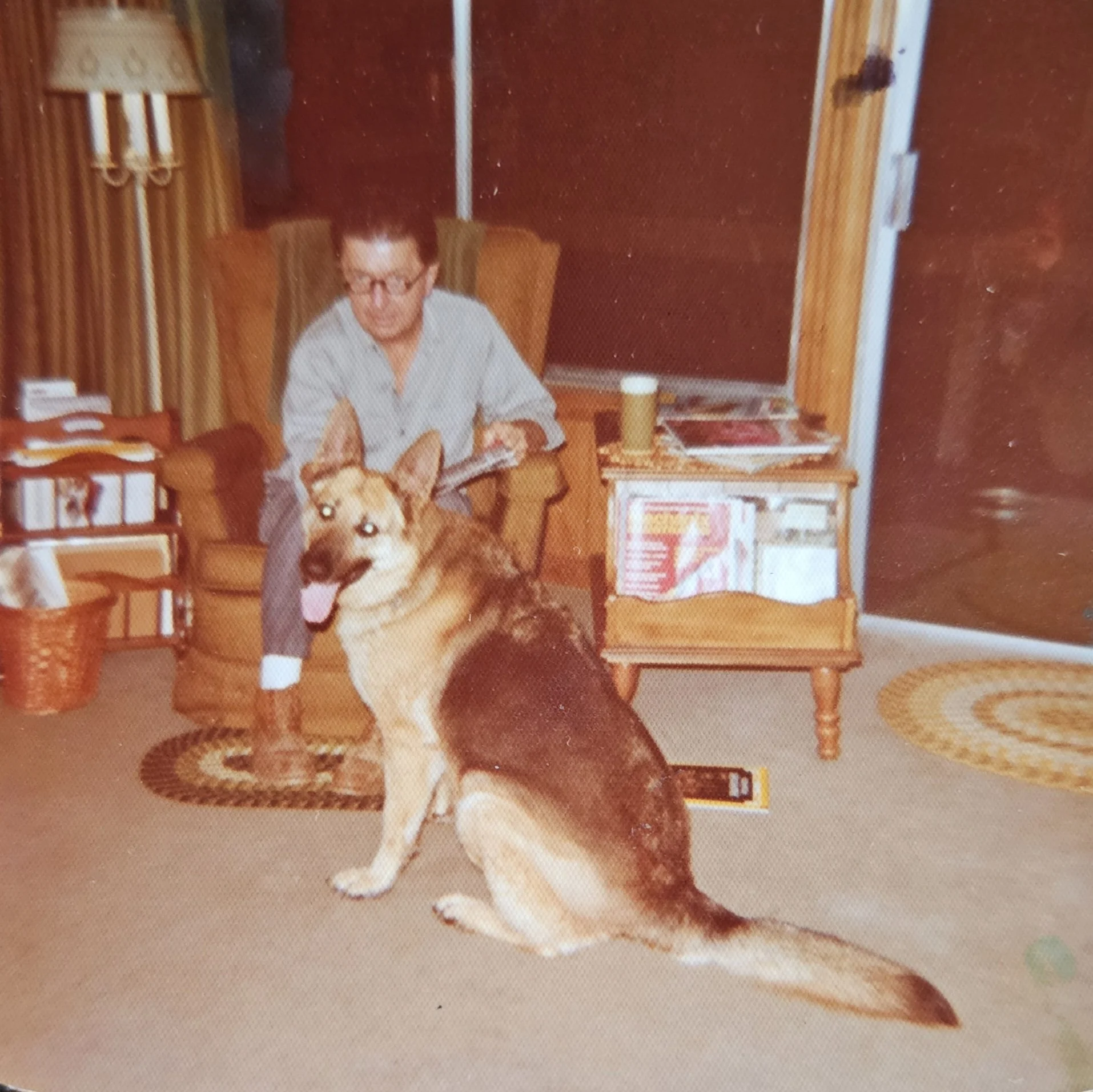
Dr. George H. Connell, Jr. (1918 – 2014)
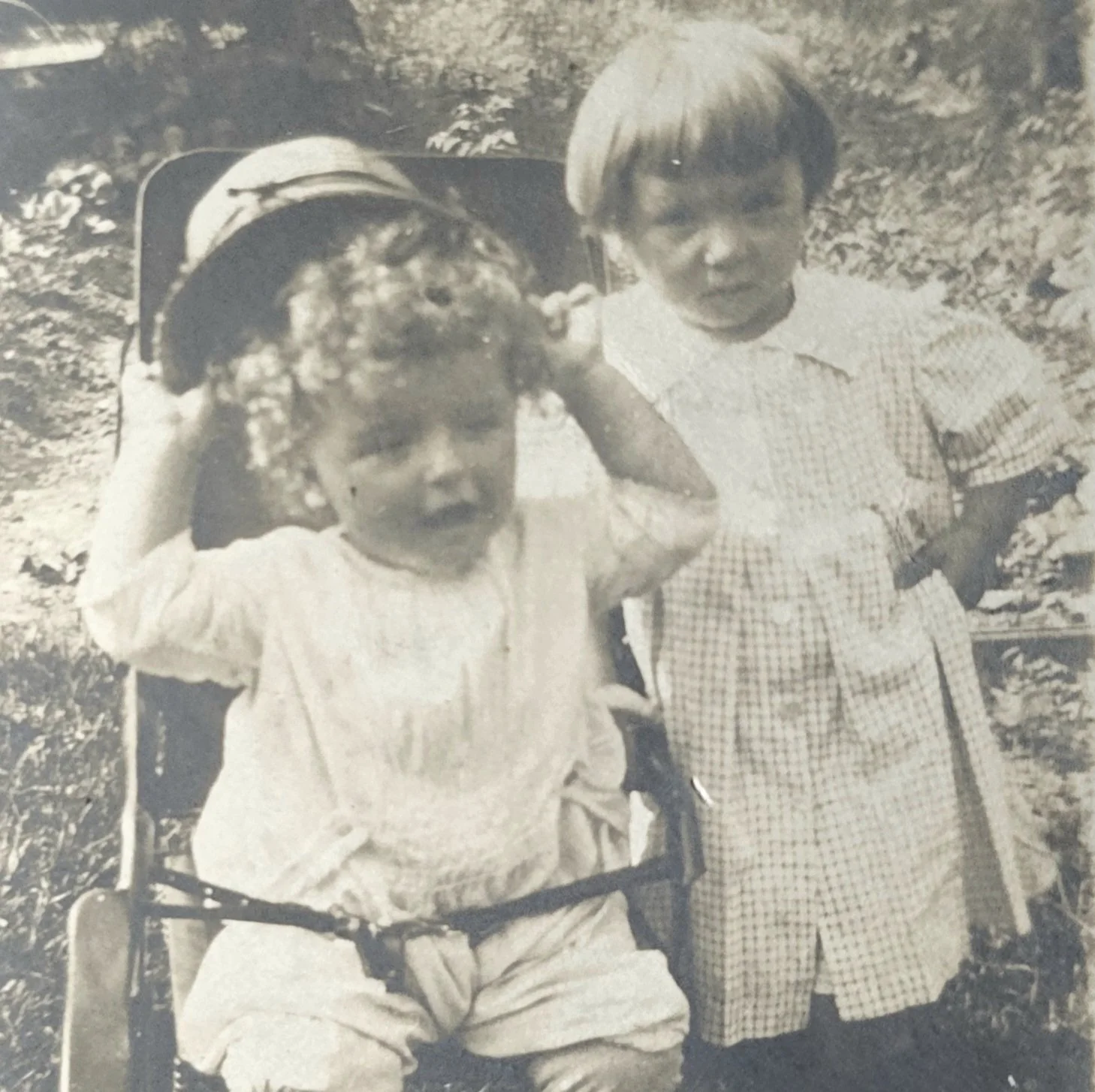
In 1918, my grandmother Rita was two years old when her parents welcomed her brother, George Jr., into the world. In the early 1900s, young boys often wore skirted garments called frocks, which were practical for potty training and reflected a period when childhood gender distinctions were less rigid. In early photographs of the siblings, it is often difficult to distinguish little Rita from George, other than by George’s wild and curly signature locks. His birthplace was in a fairly well to do area of Rochester, NY and his father was a police officer of some renown, Not much else is documented about young Georges early life other than a random photo or two of his teen years, often dressed up in his Sunday best for the camera.
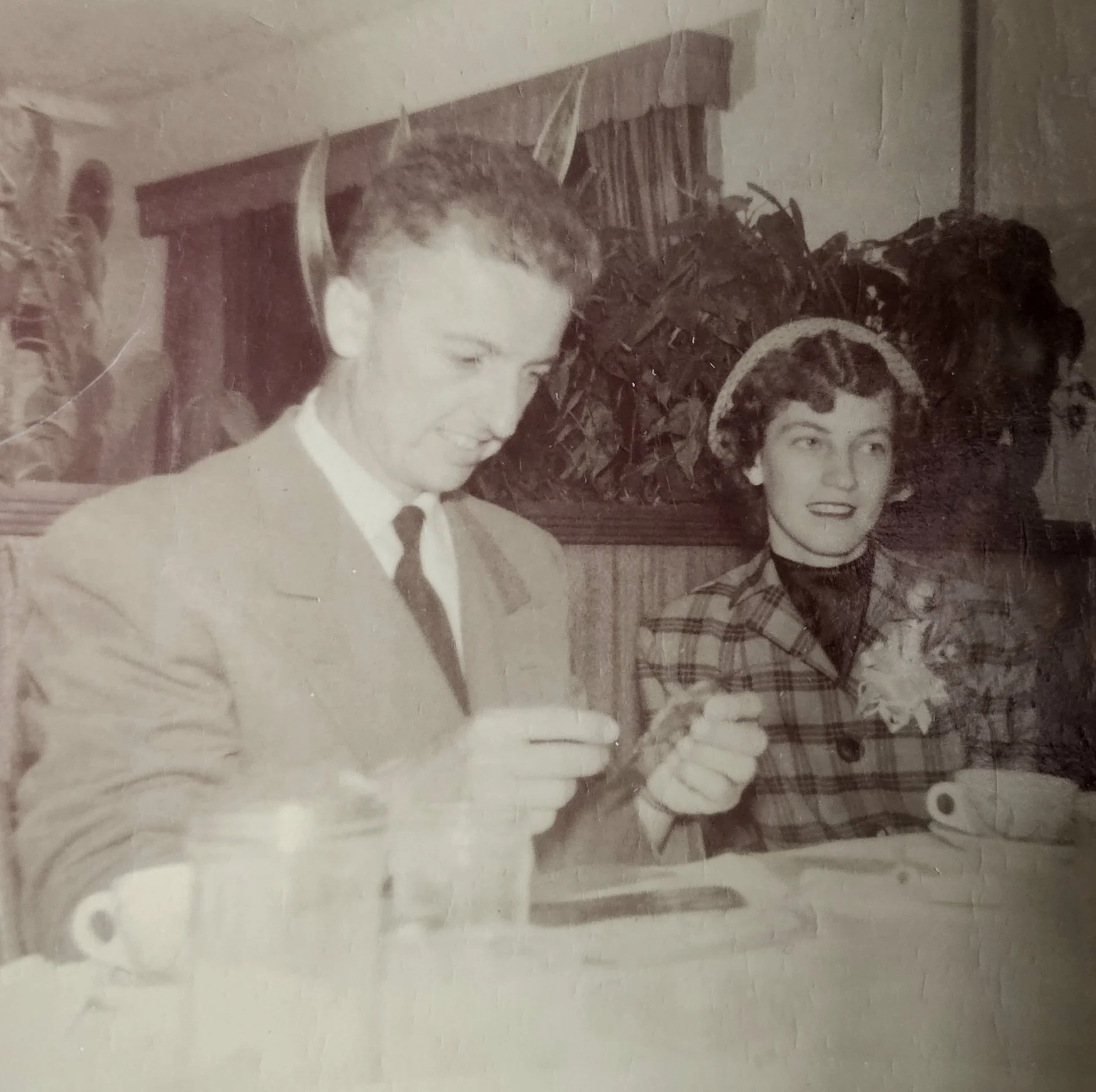
He grew up with a mind for math and went on to study both mechanical and civil engineering at the University of Rochester and the Rochester Institute of Technology (RIT). In 1941, he enlisted in the regular Army as an infantry private, but due to his cunning personality and mechanical aptitude, he was eventually commissioned in the Corps of Engineers, where he served as a demolitions and explosives officer, stationed primarily in the South Pacific until the end of WWII. After the war, his next assignment was demolition work in reconstruction period of Japan. In March of 1946 he returned to Rochester for brief employment at the New York State engineering department before entering into medical school later that fall.
After graduation, he went on earn a doctorate in medical microbiology and public health and then, after serving six years with the Army Biological Warfare Program in various positions he was transferred to the Communicable Disease Center in Atlanta. The next 20 years of his career were spent in laboratory research, epidemiology, and safety engineering, primarily working in the control of communicable, mostly tropical diseases. As a consultant to the World Health Organization, he traveled widely. When a series of viral encephalitic diseases of unknown etiology broke out in Africa in the early 1970s, George was given responsibility for the design and construction of the world’s first Class Four decontamination laboratory, which was completed and successfully tested at the Centers for Disease Control in 1978.
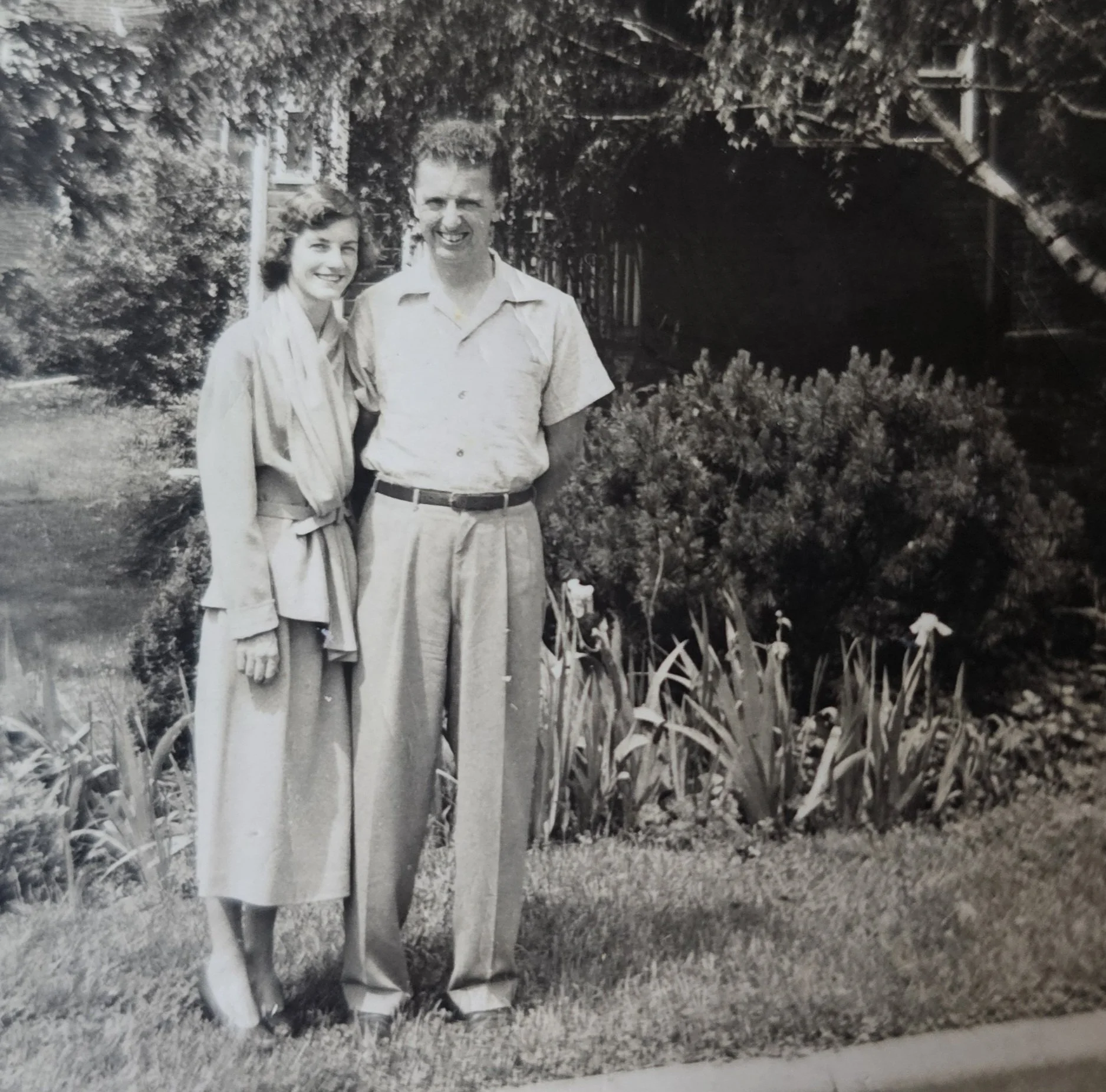
In 1979, he retired, and he and his wife Jeanne moved to Citrus County, Florida, to live out the rest of their days fishing and casually consulting for hospitals and lecturing at nearby universities.
Despite all of his professional success, George and his sister Rita always maintained a contentious and adversarial relationship. Both had big personalities and big egos, and maybe that’s just what happens when you grow up in the spoiled brat pack of Rochester in the 1920s. In time, and particularly after the war, the mutual animosity turned into bitter rivalry and resentment over family affairs, with accusations on both sides of disloyalty and callousness. Your guess as to what sad truth lay at the root of all the bitterness is as good as mine. Neither of them are around anymore to ask, but there are clues in their correspondence.
Fortunately for us, George and Rita were avid letter writers. Rita especially could be ruthless and pulled no punches with her words. Regarding both the care of their aging parents and a near-fatal medical issue involving Rita’s son James, the rift between brother and sister grew to the point of eventual estrangement. There is no correspondence that exists between them after 1970. Of the letters that do exist, I have transcribed some delightfully petty and merciless back-and-forth from the 1960s below.
At some point, George refused to receive mail from Rita, and from then on, his wife Jeanne received the letters and replied on his behalf if at all. I’m pretty sure she despised Rita as much as George did, and the feeling was mutual. It all goes to prove that despite whatever great things we accomplish in this life, at the end of the day we are all just children playing grown-up.
The following letters are unaltered; however, it is worth noting that my grandparents addressed my father and uncle by their middle names, so any reference to “Pat” refers to my father, James Patrick Voegele.
(From Rita to George) Camp Hill, PA
May 14, 1968
Dear George,
Your letter made me absolutely sick. I’d like to see you and talk to you, but I am not about to make a trip to Washington (D.C.) to do it. I’m not physically able to do it. Would you like us to pay your fare from Washington to here so we can talk about the situation at home? It wouldn’t break us. We have many more important things than that to worry about. So you are losing a few thousand dollars in selling your house- too damn bad! Some fine day you are going to realize that people and your relationship to them is a lot more important than money.
You have no idea of the horror and anguish we have gone through this past month. People we hardly know have written and called offering warmth and compassion. You were the only person I wrote to about Pat’s accident. I really thought you might care enough to send him a card.
When I wrote you that night, I was beside myself with grief and worry about things at home. I honestly don’t know quite what I said. Pat was in the hospital for 12 days and I went to and three times every day. The phone rang constantly – people who were so concerned. People brought food and gifts. I appreciated all this, but it gave me no rest. This kid was and is well thought of. He had just been awarded the ROTC scholarship that he worked so hard for.
Everyone knew of his volunteer work at the State hospital with the “disturbed” teen-agers and his work at Camp Sertoma with the retarded children during the past three summers. He is an Eagle Scout and at school he has won all kinds of honors with the ROTC and especially this counter espionage thing. He was really great at repelling and skiing. He wanted the military as a career and he had everything going for him. Our friends and his peers at school knew this and respected him for it and that is why his accident was so tragic, and everyone felt so deeply about it. The Dean of Men called from school and the Colonel in charge of the ROTC program and all his classmates and professors – but not his uncle.
Mike, Judy and Jimmie came the weekend of the 20th which was my birthday and Jimmie’s. It was shocking for them to see Pat on crutches and in a wheelchair. But it was good for the brothers to get together- they are really close friends, which we never were.
After Pat got home there was still a lot of pain and nervous twitching because of the regeneration of the nerves. I massaged until I thought my fingers would break. The last week we went to physio-therapy every day. His thigh muscles has significantly deteriorated but he was determined to get back to school to salvage what he could of this semester. Yesterday we put him on the plane, and he called last night in good spirits- he made it and his buddies were all there to meet him. Bill had the flight all set for him and will do the same thing when he comes home again which will be June 2nd- and when you talk about losing money on a house when you have paid cash for another one, I have to laugh with tears in my eyes. How much do you this accident will cost us? Pat will have to start on the prosthesis as soon as he gets home.
About the situation at home in Rochester- we called mom on Sunday night for Mother’s Day- so Pat could say good-bye to Grandma. We also called Mike and Judy so they could have some communication. We do this often because we feel the family should keep in touch. You wouldn’t believe our phone bills. Mike and Judy took mom out to dinner on her birthday and got a sitter to look after dad and Jimmie. Those are two good kids.
So, even though I told you I am unwilling to come to Washington, I am going to Rochester on Friday, the 17thto see what I can do to help our parents. I’m exhausted in every way, but if this had not happened to Pat, I would have been up there right after Easter. They need money George- the medications come high, but most of all they need love and attention and that is what I, and I may add, my husband too, have tried to give them all these years. Always, when we were in the States, we went home- out of sense of duty more than anything else – and we still do it. It hasn’t always been to our liking, believe me. I married a wonderful guy. He is understanding and kind. If you can tear yourself away from your job and come to Rochester while I am there, fine. I hope to be there not more than a week- if not, our home is always open to you and Jeannie- Please give my regards to her.
P.S. I’d like Jeannie to read this letter.
The parents still do not know the extent of Pat’s accident. I think he told them he is in a cast. If I feel it wise I will tell mom when I see her. I think she is strong enough to take it but dad isn’t.
George, I know you meant well when you invited them to come to live in your house but it would never have worked out. You just cannot uproot people at this age. They would have been miserable and so would you have been. They wouldn’t be happy here either, but maybe, after dad get better, I may try to bring them down here for a week or two.
Rita
(From George to Rita in response) Washington, D.C.
May 20, 1968
Rita,
I am returning your letter, which is far and away the most insulting and unreasonable one I have ever received. There was no excuse for writing this way to your brother.
Before you alienate everyone you know, I have some advice for you: before you send out anything like that again try reading it – If it turns your stomach, try thinking instead of emoting your way through your problems.
No apology you can make is going to erase the memory of that letter.
George
P.S. Try reading it and see how much you enjoy it.